

Africa recorded stablecoin flows equivalent to 6.7% of its GDP in 2024, according to a new International Monetary Fund (IMF) report, placing the continent second only to Latin America and the Caribbean (7.7%) in stablecoin usage relative to economic size.
While Africa’s absolute transaction volumes remain smaller compared to regions like North America and Asia, the IMF findings highlight the outsized role of stablecoins in cross-border payments across emerging markets.

Key IMF Findings
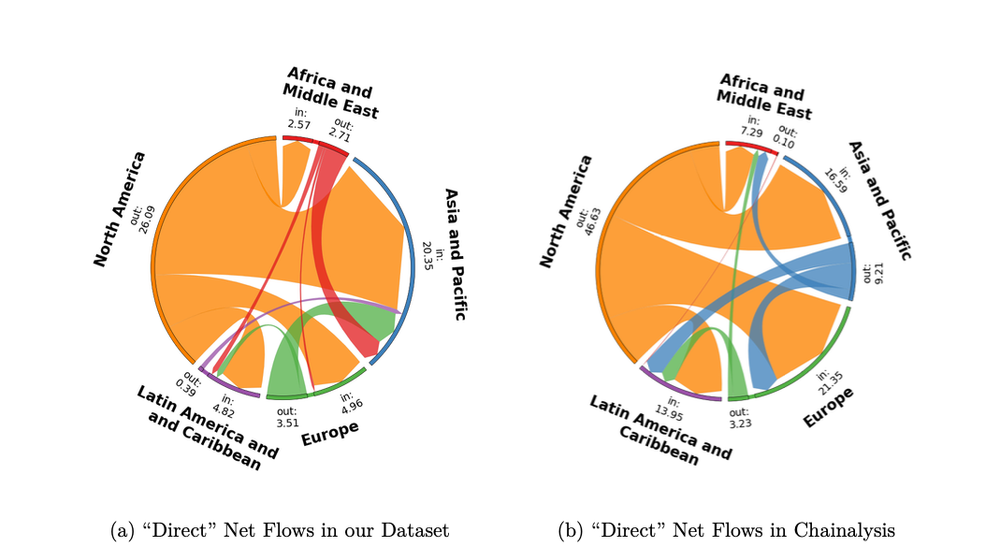
The IMF’s research, which analyzed $2 trillion in global cryptocurrency transactions last year, revealed several notable insights into Africa’s stablecoin activity:
- Over $200 billion in stablecoin activity was recorded across Africa and the Middle East combined.
- Tether (USDT) dominated regional stablecoin flows, accounting for 57.3% of transactions, followed by USD Coin (USDC) at 42.7%.
- Binance processed 74.3% of Africa’s stablecoin transaction volume, underscoring the continent’s preference for platforms serving emerging-market users. Coinbase handled 25.7%, reflecting its stronger alignment with advanced economies.
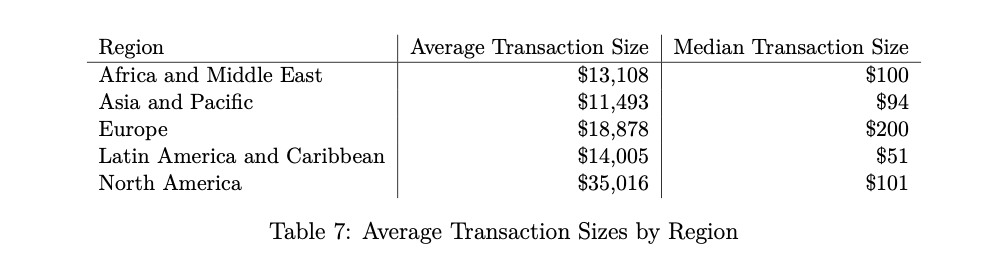
- The average transaction size in Africa and the Middle East was $13,108, smaller than North America’s $35,016 but higher than Asia-Pacific’s $11,493.
- Cross-border transactions dominate: Only 14% of stablecoin flows stayed within the region, with the majority linked to remittances and trade payments rather than domestic transfers.
Why This Matters
The high ratio of stablecoin flows to GDP reflects Africa’s growing dependence on crypto for cross-border payments, particularly remittances and international trade settlements.
Traditional banking systems in many African countries face persistent challenges, including high fees, currency volatility, and slow transaction times. Stablecoins, pegged to the U.S. dollar, offer faster, cheaper, and more predictable transfers, making them an increasingly attractive alternative.
Global Context
- In absolute volume, North America ($633bn) and Asia-Pacific ($519bn) lead the world in stablecoin transactions.
- However, emerging markets like Africa and Latin America dominate when measured against GDP, signaling higher adoption rates relative to economic size.
- USDT remains the leading stablecoin across most emerging markets, while USDC finds greater adoption in advanced economies such as Europe and North America.
- North America is the largest net exporter of stablecoins, with $54 billion in outflows in 2024 to meet global demand for dollar-backed digital assets.
The Big Picture
The IMF’s findings reinforce what many in the crypto sector already observe: stablecoins are becoming a vital part of Africa’s financial lifeline. Whether for migrant workers sending money home, traders importing goods, or businesses navigating foreign exchange restrictions, stablecoins are quietly reshaping Africa’s role in the global financial network.
As adoption grows, the region could see even greater integration of blockchain-based financial tools, potentially leapfrogging traditional banking infrastructure in the years ahead.


