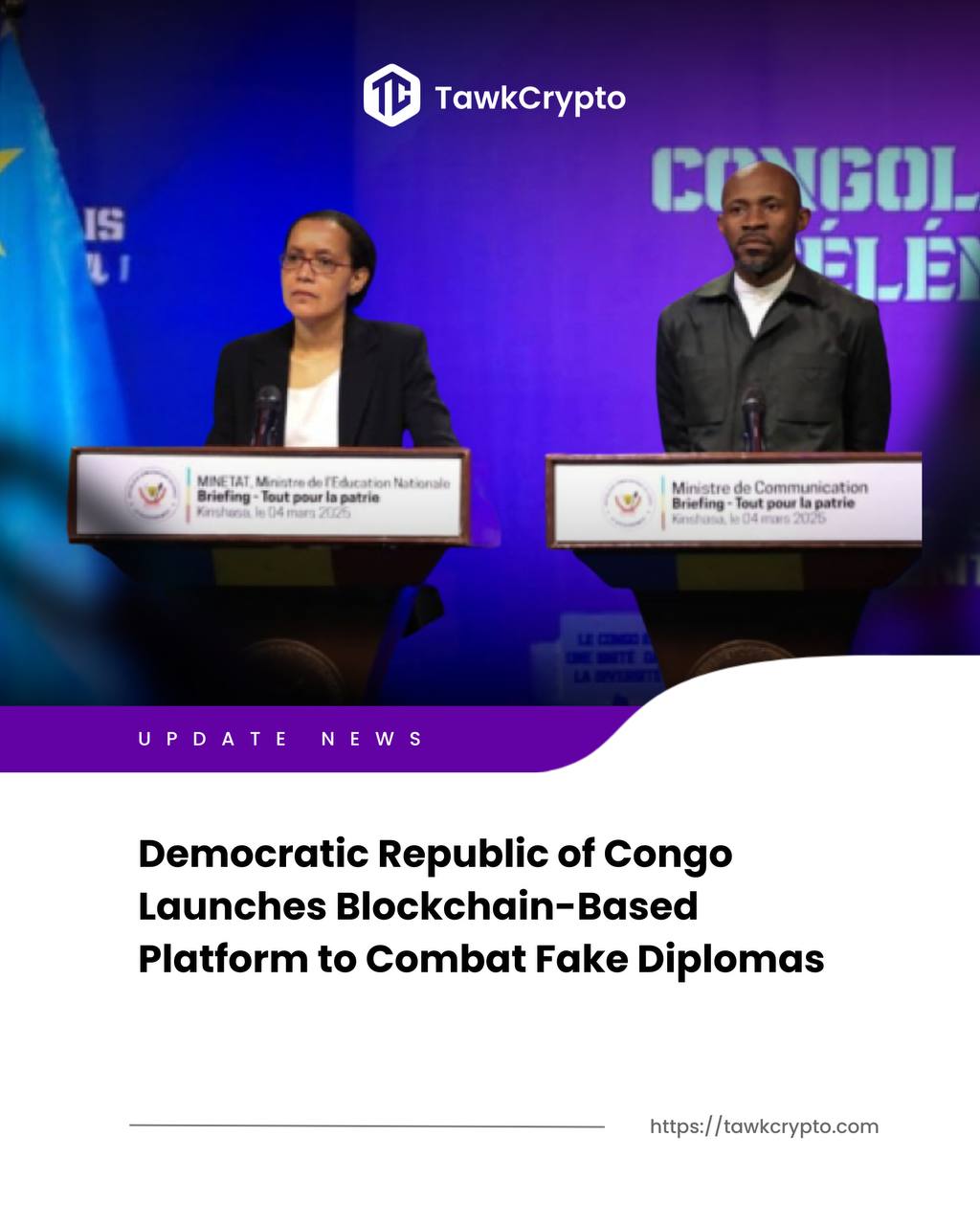
In a major step toward education reform and institutional transparency, the Democratic Republic of Congo (DRC) has officially launched a blockchain-powered diploma verification platform designed to curb the widespread issue of forged academic certificates.
The initiative, dubbed “Certification and Authentication of Diplomas,” is spearheaded by the Ministry of Higher and University Education in collaboration with local technology firm TindaTech. By integrating blockchain into academic credentialing, the platform ensures diplomas are immutable, verifiable, and accessible in a secure digital format.
Why This Matters
The move comes after a 2023 government audit uncovered that nearly 30% of all diplomas submitted for official verification were either counterfeit or unverifiable. This revelation triggered concerns over the integrity of academic qualifications in the country and prompted authorities to act swiftly.
According to Minister of Higher Education, Mohamed Bule, the platform represents a critical tool in restoring credibility to the nation’s education system.
“The blockchain platform will help us authenticate academic degrees issued by Congolese universities and put an end to the fraud that undermines the value of our education,” Bule stated during the launch ceremony.
How the System Works
Hosted on www.schoolap.cd, the platform digitizes and stores academic credentials on a blockchain ledger, enabling tamper-proof archiving and real-time access to verified diplomas. Users, whether students, employers, universities, or embassies, can instantly verify the authenticity of qualifications online without relying on manual, paper-based processes.

Key features include:
- Permanent digital archiving of diplomas to prevent data loss and physical damage.
- Tamper-resistant records that ensure credentials cannot be forged or altered.
- Downloadable digital diplomas accessible directly by graduates.
- Centralized access for institutions and employers to validate qualifications.
Addressing a Continental Problem
Fake academic credentials are a pervasive issue across Africa. In Nigeria, the National Universities Commission (NUC) continues to crack down on unaccredited institutions and fake certificates, while South Africa has seen a rise in fraudulent qualifications submitted for employment opportunities.
The DRC joins a growing list of African countries turning to blockchain for administrative innovation. Ethiopia previously partnered with Cardano to digitize student records across its national education system, while Mauritius is exploring similar integrations to streamline government operations.
What’s Next

The blockchain diploma authentication platform is currently being piloted in select Congolese universities, with plans for nationwide expansion in the coming months. Authorities believe the initiative could serve as a regional model for academic transparency and integrity.
This development marks another significant milestone in Africa’s adoption of blockchain technology, not just in finance but across critical sectors like education, governance, and identity verification.
As Minister Bule concluded: “People deserve a system that values the truth. Blockchain gives us that system.”
Read also: Artisanal Miners in Congo Turning to Bitcoin Mining